

Senator Rose’s MARL Argument Doesn’t Add Up
Published in WV Metro News June 11, 2026
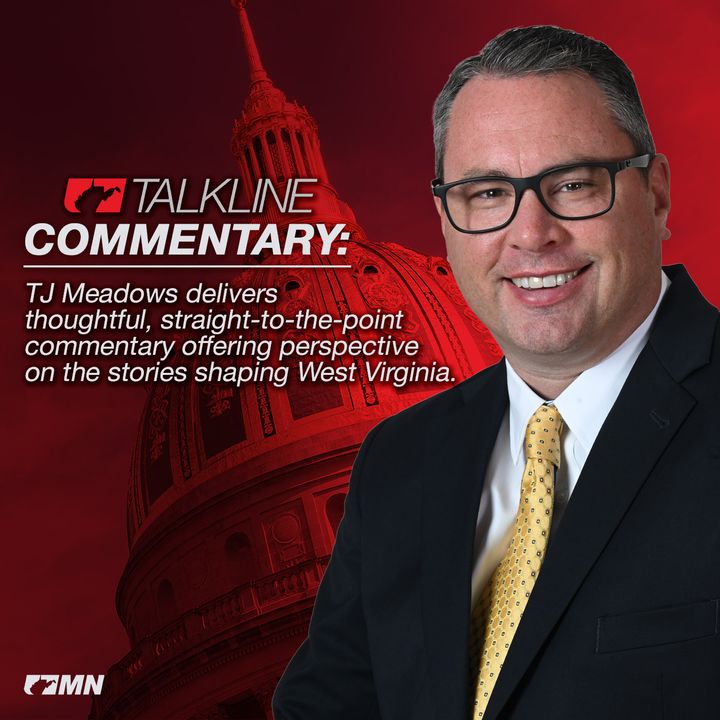
By TJ Meadows, former federal policy director for American Electric Power
Buckle up. Today’s commentary is a bit longer than normal because this issue is more complicated than usual. It’s worth the extra time.
State Senator and Chairman of the Senate Energy, Industry and Mining Committee Chris Rose is no fan of the proposed MARL transmission project, which would cross roughly 60 miles of West Virginia.
“I stand firmly against MARL—it provides no economic benefit to WV while taking our land and farms, threatening our energy future, jobs and families.”
Sounds bad.
Rose also said:
“I’m not opposing coal-fired power — I’m opposing the MARL transmission line. MARL doesn’t use WV energy, doesn’t power a single WV home or business, and delivers zero economic benefit to our miners, families or communities. It simply seizes our farmland through eminent domain so Pennsylvania and Virginia can ship power across our land for their gain.”
Those comments illustrate an incomplete understanding of how the electric grid actually works and the benefits it provides to West Virginia. In fairness to Rose, he is hardly alone. Many elected officials — and many members of the public — don’t fully understand the system either. It’s easy to take for granted.
This project understandably raises emotions. We’re talking about land, often family land that has been passed down through generations. No one can be faulted for wanting to protect that interest and with vigor. Nobody wants to see people lose something they love.
But emotion alone has helped create a narrative that doesn’t tell the full story.
Here’s the reality.
West Virginia is part of an interconnected electric grid managed by PJM, a regional transmission organization. Why should you care? Because participation in that system provides tremendous value to the Mountain State.
It helps keep the lights on when you flip the switch. It allows utilities to access electricity from across a vast region, improving reliability and helping control costs – the benefit of always utilizing the most cost-effective energy available. It gives West Virginia generators access to markets stretching from Illinois to New Jersey and from Michigan to North Carolina.
When electricity generated in West Virginia is sold into those markets, the benefits – profits – largely flow back to customers, workers and communities throughout the state.
To argue this transmission line provides no benefit to West Virginia ignores the reality that many of the benefits we enjoy today stem directly from participation in an interconnected grid, and the fact that this line is needed to make that grid function efficiently and reliably.
Those advantages would not exist in the same way if West Virginia operated as an isolated system similar to Texas.
Governor Patrick Morrisey has repeatedly promoted his “50 by 50” vision for West Virginia. He recently told CBS’ Major Garrett the state is poised to be the nation’s battery. A key component of that strategy is leveraging the state’s coal, natural gas and future nuclear resources to generate electricity here and sell it into growing markets elsewhere. A good strategy.
Certainly, we want more demand inside West Virginia. More manufacturing here, more factories. Projects like Nucor and other industrial development help accomplish that goal.
But exporting electricity is also an economic opportunity. In many cases, it is the opportunity.
Just yesterday at noon, West Virginia’s generation fleet was exporting more than 3,000 megawatts of electricity to neighboring states. Is that bad? Of course not. It supports generation, jobs and fuel production. The coal and natural gas used in those plants are often produced by West Virginia workers. Generators can’t export energy if they haven’t a market to participate in. If we can’t sell electricity off-system, do we need that much coal or natural gas? No.
Transmission equals access to that market and the state can’t be “America’s battery” without the grid.
Let’s be honest about what MARL opponents like Rose are effectively, perhaps unknowingly, arguing.
They want West Virginia to enjoy the benefits of an interconnected grid while rejecting some of the obligations that come with participating in it.
Life doesn’t work that way. Neither does the electric grid.
Consider why MARL was proposed in the first place.
Northern Virginia’s explosive growth in electricity demand — driven largely by data centers — has created severe transmission congestion. Congestion is exactly what it sounds like: too much demand and insufficient transmission capacity to move electricity where it’s needed.
The proposed line would help relieve some of that congestion and improve the grid’s overall ability to move power across the region.
That matters to West Virginia.
Less congestion means generators throughout PJM have better access to markets. On many days, that includes coal-fired plants in West Virginia. More access can mean additional generation, increased revenues and stronger economics for facilities that already exist.
That’s good news for a state that still relies heavily on coal jobs and coal-fired generation, is discussing new coal development and is actively building additional natural gas generation.
Now, if West Virginia truly wants to avoid projects like MARL, there is a broader conversation to have about whether participation in PJM remains worthwhile. Lukewarm isn’t a viable option.
For the record, leaving PJM or an RTO-like construct may prove ultimately impossible in today’s world for a number of reasons outside the scope of today’s commentary, but let’s go with the example for a moment.
Leaving PJM would come with substantial tradeoffs, including increased reliability risks and the loss of access to one of the largest wholesale electricity markets in the world.
Is that tradeoff worth it?
Reasonable people can disagree.
What is not reasonable is pretending West Virginia can reject the responsibilities that come with an interconnected grid while continuing to enjoy all of its benefits.
A few additional points worth considering:
- “PJM has flaws.” Absolutely. The organization must do a better job of getting generation connected in a timelier manner. But criticism of PJM’s execution is not the same thing as arguing the concept of an interconnected grid is flawed.
- “The line doesn’t connect to anything in West Virginia.” Perhaps not today. However, a non-binding statement of principles obtained by MetroNews outlines collaboration between the state, PJM, NextEra and others to explore potential substations and additional opportunities within West Virginia.
The grid is like a woven blanket. Every strand helps hold it together. MARL is one of those strands now required.
If West Virginians conclude they don’t want this project, that’s their right. But the need will not just go away with that conclusion.
Ultimately, that decision should be made with a clear understanding of what participation in an interconnected grid means — not with the mistaken belief that we can keep all of the benefits while accepting none of the burdens.
Editor’s Note: Meadows is a former federal policy director for American Electric Power with decades of experience in the energy and utility businesses.